

A Different Way to Learn: Our 14–16 Alternative Education Offer

Updated: Jan 25
For some young people, traditional classroom learning doesn’t always allow them to thrive. That’s why we’re proud to introduce our 14–16 Alternative Education Programme, a supportive, practical and engaging offer designed for pupils who learn best through doing, experiencing, and building real-world skills.
This programme has been carefully developed with both pupils and parents in mind, providing a structured pathway that supports confidence, wellbeing, and future progression, while keeping education meaningful and relevant.

🌱 Who Is This Programme For?
Our 14–16 provision is suitable for young people who may:
Feel disengaged or anxious in a mainstream school setting
Awaiting a new placement or require a short- to medium-term alternative provision
Have SEND, SEMH needs, or benefit from a smaller, calmer learning environment
Learn best through practical, hands-on experiences
Have a strong interest in animals, the outdoors, or vocational pathways
The programme is not about removing education, it’s about delivering it differently.
Outcomes and Recognised Qualifications
Young people accessing the programme have the opportunity to work towards City & Guilds OFQUAL-registered qualifications, providing clear, nationally recognised outcomes that support progression beyond the programme. Depending on individual needs, ability and placement length, pupils may achieve:
Level 1–3 Horse Care qualifications, developing practical skills, responsibility and an understanding of animal welfare and industry standards
Functional Skills in Maths and English (Level 1 and Level 2), embedded into practical activities and real-life tasks to support confidence and progression
Employability Skills qualifications, supporting communication, teamwork, time management and workplace readiness
Personal Development awards, recognising progress in confidence, self-management, resilience and self-awareness
Accredited evidence of achievement, providing tangible outcomes that support post-16 pathways
Clear progression routes into college courses, apprenticeships, vocational training or supported reintegration into education
These outcomes ensure that each young person leaves the programme with meaningful recognition of their learning, skills and progress, helping to open doors to future education, training and employment.

Alternative Education Through Real-World Experience
Learning takes place within a working rural and equine environment, where pupils are involved in structured daily routines linked to horse care and yard life. These experiences provide natural opportunities to develop responsibility, communication, confidence and resilience.
Working with horses encourages calm behaviour, clear boundaries and emotional awareness. Young people quickly begin to see how their actions and communication have an impact, helping them to build self-regulation and trust in themselves and others.
Functional Skills Embedded Into the Day
Functional Skills are not taught in isolation. Instead, English, maths and wider employability skills are woven into everyday activities. Pupils may practise maths through measuring, timings and planning tasks, and develop English skills through discussion, reflection, written logs and instructions.
This approach helps learning feel relevant rather than abstract, and supports pupils to understand how education links directly to real-life situations, future training and employment.
One pupil on the programme, aged 15, had previously struggled to engage with maths in a classroom setting and lacked confidence in their own ability. During a practical yard session, they were supported to calculate a horse’s medication dosage based on the horse’s weight, using division and fractions to work out the correct amount from the dosage instructions. The pupil worked through the calculations step by step, checking their working and accuracy with a member of staff before the medication was prepared. Because the task carried real responsibility and a clear purpose, the pupil remained focused and motivated, asking questions and taking pride in getting the calculation right.
Wellbeing, Confidence and Emotional Development
Many young people accessing alternative provision need support beyond academics. Our programme places strong emphasis on emotional wellbeing, confidence-building and developing healthy coping strategies. The calm outdoor environment, combined with consistent adult support, allows pupils to feel safe, understood and valued.
Over time, pupils often show improvements in emotional regulation, motivation and engagement, both within the programme and in other areas of their lives.
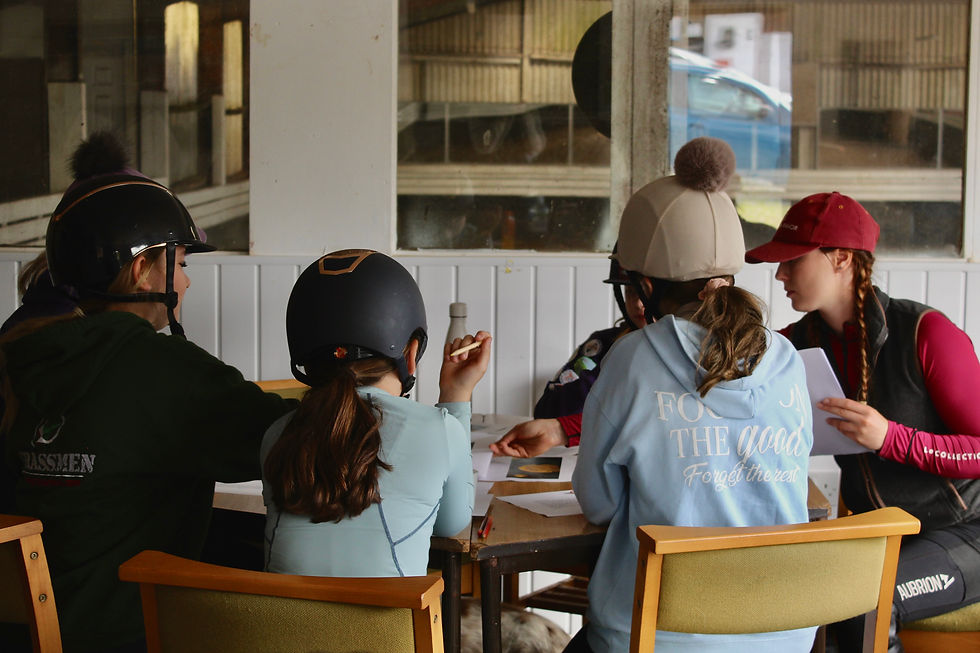
Delivered by an Experienced, Multidisciplinary Team
The 14–16 programme is delivered by a highly skilled and diverse team, ensuring pupils are supported academically, emotionally and practically throughout their placement. This includes:
A specialist member of staff who typically works with pupils aged 14+ and delivers Functional Skills, holding a Master of Science, a Doctor of Philosophy, and a Postgraduate Diploma in Veterinary Physiotherapy, ensuring learning is accurate, purposeful and linked to real-world application
The SEND Programme lead is a qualified teacher with a Cert Ed who brings strong educational structure, consistency and understanding of curriculum-based learning
Team members with higher-level business management and coaching qualifications, supporting employability skills, confidence, communication and future pathways into careers or further education.
A qualified Art Therapy Specialist whose work is particularly effective in supporting pupils with SEND, emotional regulation and self-expression
Together, this breadth of expertise allows the programme to integrate education, wellbeing, vocational skills and safeguarding within a calm, structured and supportive environment, giving pupils consistent guidance from professionals they can trust.
How to Access This Alternative Provision
Access to the 14–16 Alternative Education Programme is typically secured through a young person’s Special Educational Needs Coordinator (SENCO) or inclusion lead at their current school. Parents and carers play a crucial role in this process, and we strongly encourage families to speak directly with their child’s SENCO and advocate for enquiries to be made on the pupil’s behalf. The more clearly a parent or guardian can express their child’s needs, challenges, and strengths, the more likely it is that suitable alternative pathways will be explored and considered. Once an enquiry is made, we work collaboratively with schools, local authorities and families to discuss suitability, agree clear outcomes and determine the most appropriate placement and support for the young person.
We can support you at every step of the process. To find out more, email us on info@biglandhall.com or phone us on 015395 30333.


Comments